When a patient completes a course of radiofrequency treatment at a dermatology clinic and sees meaningful improvement in skin firmness, several things contributed to that outcome. The device delivered energy to the dermis. The clinician selected the correct settings. And, just as importantly, the treatment followed a protocol, a structured plan with specific phases, defined intervals, progressive intensity, and built-in progress assessment.
By contrast, when the same category of device is sold for home use and the instructions say “use 2–3 times per week on clean skin,” the hardware may be comparable but the protocol is not. As a result, the difference in outcomes between clinical and consumer settings has as much to do with protocol design as it does with device specifications.
Progressive intensity
Clinical aesthetic protocols rarely start at full power. The typical approach is dose escalation: an initial phase at lower intensity to assess tissue tolerance, followed by gradual increases over subsequent sessions as the skin acclimates.
This is not conservative timidity. Rather, it is evidence-based practice. Lower initial intensity reduces the risk of adverse reactions (erythema, post-inflammatory hyperpigmentation, discomfort) that lead patients to abandon treatment. In addition, it allows the clinician to observe individual tissue response before committing to higher energy levels.
In practice, consumer devices often ship with a single recommended setting, or with numbered intensity levels but no guidance on when to progress from one to the next. As a result, the user either starts too high (discomfort → discontinuation) or stays too low indefinitely (suboptimal results → “doesn’t work” → discontinuation). In contrast, an at-home device protocol benefits enormously from a structured escalation plan: for example, start at level one for the first two weeks, move to level two for weeks three and four, and reassess from there.
Treatment density mapping
In a clinical setting, the practitioner follows a treatment map, a systematic coverage pattern that ensures consistent energy delivery across the treatment zone. Each pass covers a defined area with a specific dwell time (the duration the device remains in contact with each section of skin). Overlap between passes is controlled to prevent under- or over-treatment of adjacent areas.
In contrast, consumer instructions tend to substitute precision for generality: “glide the device across the treatment area in slow, overlapping strokes.” This leaves critical variables (pass speed, overlap percentage, dwell time per zone) to individual interpretation, which in turn produces inconsistent coverage that varies from session to session.
Fortunately, the clinical principle translates to a straightforward consumer practice: divide the treatment area into defined zones (forehead, left cheek, right cheek, jawline, neck), allocate a specific time to each zone, and follow the same sequence every session. Ultimately, the consistency of coverage matters as much as the total treatment time.
Recovery scheduling
Every energy-based modality requires recovery time between sessions. During the rest period, the biological cascade triggered by the previous session (inflammation → proliferation → remodeling) progresses without interruption. If treatment resumes before recovery is complete, it can disrupt this cascade, producing diminished returns or cumulative irritation.
Accordingly, clinics build treatment intervals into the protocol based on the modality and intensity. For instance, RF at lower intensities typically requires 48 hours between sessions. Microneedling at clinical depths may require 2 to 4 weeks. LED, on the other hand, does not produce thermal injury and can be used daily or every other day.
At-home device protocols benefit from the same specificity. Put simply, “use regularly” is not an at-home device protocol. By comparison, “RF: Monday, Wednesday, Friday. LED: daily. Microneedling pen: every two weeks, followed by 48-hour RF pause” is an at-home device protocol. In other words, the distinction is the difference between a vague intention and a structured plan.
Treatment course structure
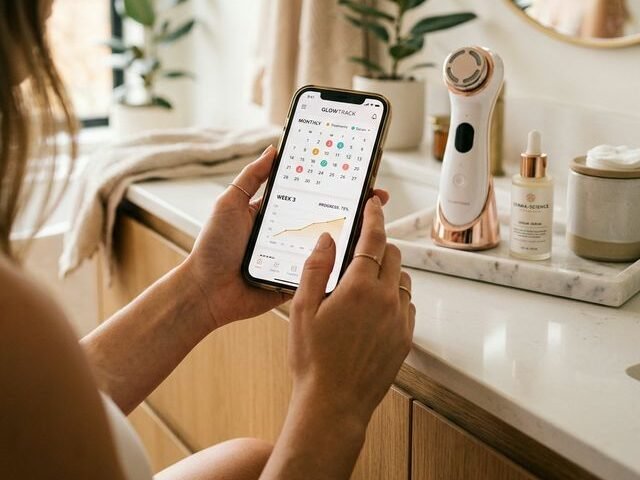
Clinical aesthetic treatments follow a defined course structure with distinct phases:
Induction phase (weeks 1 to 6): higher treatment frequency to build a foundation of biological response. The treatments activate fibroblasts, which in turn initiates collagen synthesis across multiple overlapping cycles.
Assessment (week 6 to 8): the clinician evaluates tissue response, reviews progress photography, and adjusts the protocol based on individual results.
Maintenance phase (ongoing): reduced treatment frequency to sustain the gains achieved during induction. The goal shifts from building new collagen to maintaining the density already achieved.
However, most consumer devices do not communicate these phases. Without that structure, two common patterns emerge: over-treatment in early weeks (unsustainable intensity that leads to burnout) and under-treatment in later weeks (the initial enthusiasm fades without a clear maintenance plan to replace it).
An effective at-home device protocol has a beginning, a middle, and an ongoing maintenance stage. Each stage has its own treatment frequency and intensity, and the transitions between them are defined in advance.
Milestone photography
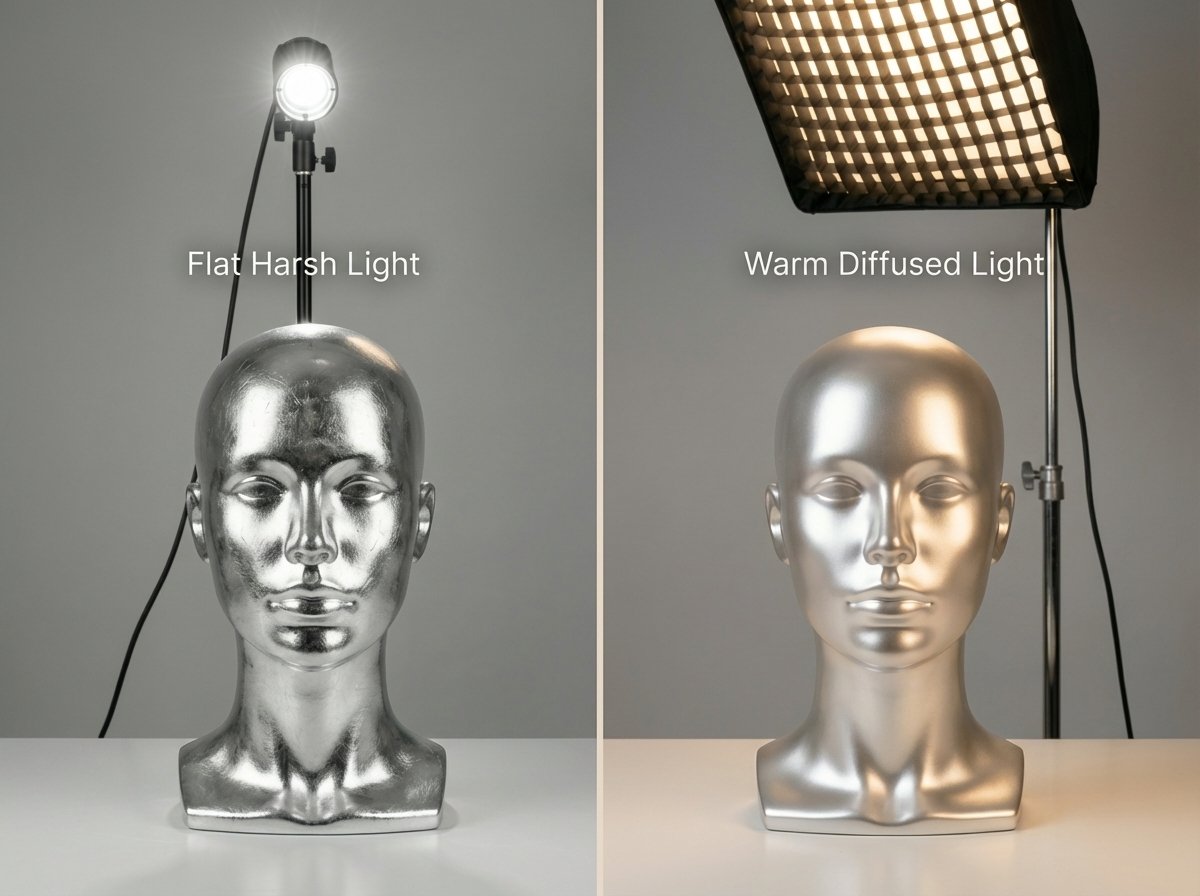
Clinics photograph patients at defined intervals under standardized conditions: consistent lighting, consistent distance, consistent angle, consistent expression. This provides an objective record of change that the patient’s daily mirror observation cannot match.
Similarly, the clinical principle is directly applicable at home. A simple protocol (same window, same time of day, same distance, same expression, same background) applied at day 1, week 4, week 8, and week 12 produces a progress record that makes gradual improvement visible through side-by-side comparison. Without it, the slow accumulation of structural improvement is easily overlooked, simply because the daily view changes too gradually for the eye to register.
This connects to the biological reality described in the skin collagen remodeling literature: the biology is ahead of perception. Milestone photography, therefore, closes the gap between what the skin has achieved and what the person notices.
The consumer translation
Importantly, none of these principles require clinical training to implement. They simply require information.
An at-home device protocol that incorporates progressive intensity, zone-based treatment mapping, biologically appropriate recovery intervals, phase-structured treatment courses, and standardized milestone photography is, in its essential design, the same protocol a clinician would build.
Overall, the gap between clinical and consumer outcomes is closing, and it is closing fastest among the brands and consumers who treat at-home device protocol design with the same seriousness that clinics have always applied.